
No products in the cart.
Home Remedies vs Clinical Hair Growth Kits: What Actually Reduces Hair Fall?
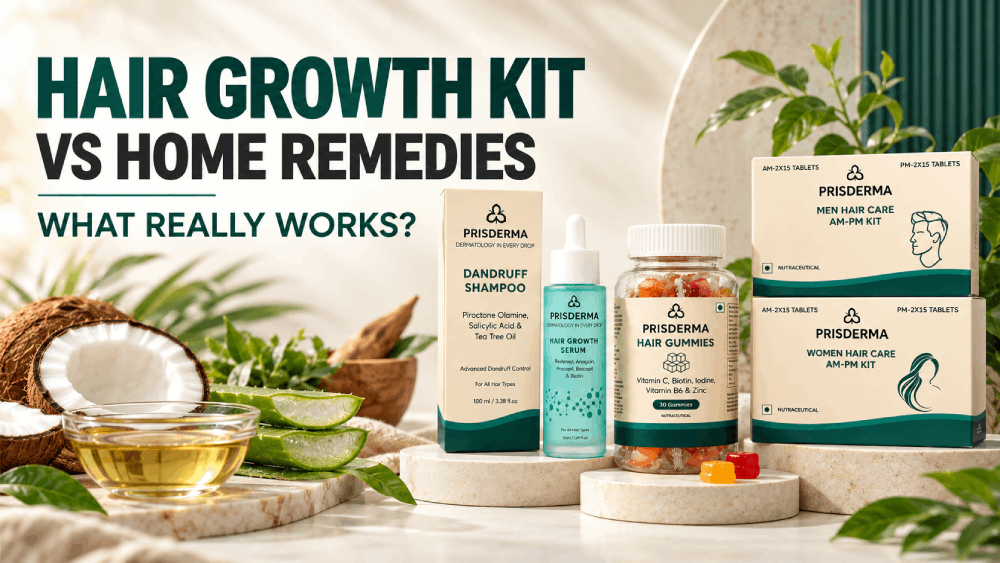
Onion juice, rice water, curd hair masks, and coconut oil massages, many of us have tried at least one home remedy for hair fall, often on the advice of a relative or something we saw online. But when hair fall doesn’t improve after weeks of trying, an important question comes up: hair growth kit vs home remedies, which approach makes more sense?
The answer isn’t as simple as choosing one over the other. Hair fall can have many causes, including genetics, hormonal changes, nutritional deficiencies, stress, scalp conditions, and certain medical conditions. Understanding the cause is often more important than choosing a particular remedy.
This doesn’t mean home remedies are useless. Some can support hair and scalp health, but their benefits are different from those of treatments designed specifically to address hair loss. Here’s what you should know before choosing either approach.
Do Home Remedies Work for Hair Loss? Here’s What the Evidence Says

The answer depends on the remedy and, more importantly, the cause of your hair fall.
Some commonly used home remedies have limited evidence for supporting hair or scalp health:
- Coconut oil may help reduce protein loss from the hair shaft when used as a pre-wash treatment. This can help improve hair condition and reduce damage or breakage, but it doesn’t necessarily stimulate new hair growth.
- Onion juice has been studied in small research involving alopecia areata, a specific type of patchy hair loss. However, this limited evidence shouldn’t be interpreted as proof that onion juice can treat all types of hair fall or pattern hair loss.
- Scalp massage may help improve scalp circulation and has been investigated for its potential effect on hair thickness. However, the available evidence is limited, and it shouldn’t be considered a replacement for an appropriate hair-loss treatment.
So, do home remedies work for hair loss? Some may help improve hair condition, reduce breakage, or support scalp care. However, they generally have limited evidence for treating persistent hair loss caused by factors such as genetics, hormonal changes, nutritional deficiencies, or certain scalp and medical conditions.
The distinction is important: making your hair feel healthier isn’t necessarily the same as addressing the reason you’re losing hair.
Home Remedies for Hair Fall: Where They May Fall Short
Most home remedies for hair fall have a few practical limitations.
1. Inconsistent concentration and formulation
DIY remedies don’t have standardized concentrations. For example, the strength of an onion juice preparation can vary depending on how much onion is used, how it is prepared, and how it is applied.
With formulated hair-care products, ingredients can be selected and combined in controlled formulations, making the routine more consistent.
2. They may not address the underlying cause
Hair fall isn’t always a scalp-surface problem. Genetic hair loss, nutritional deficiencies, hormonal changes, stress-related shedding, and some medical conditions require a different approach.
A home remedy may support hair or scalp condition without addressing the underlying factor responsible for continued shedding.
3. Consistency can be difficult
Some DIY routines involve preparing ingredients, mixing them, applying them, and washing them out. If a routine becomes difficult to maintain, consistency can suffer.
A simpler routine can make it easier to follow a hair-care regimen regularly over time.
This doesn’t make home remedies useless. They can still be used as supportive hair-care practices when appropriate. The important thing is to understand what they can realistically do, and what they can’t.
What Makes a Hair Growth Kit Different?
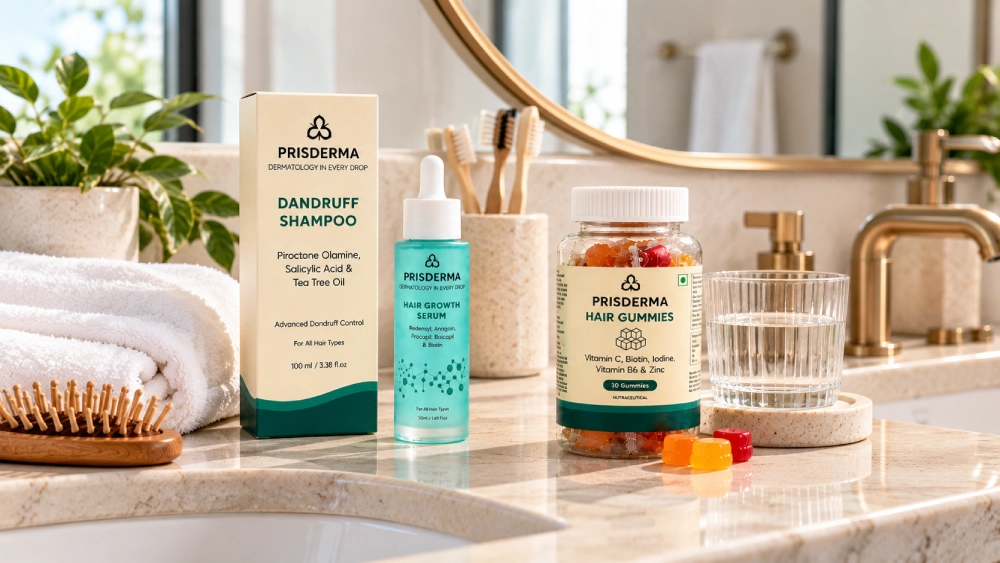
A structured hair growth kit typically combines multiple products into a single routine rather than relying on one ingredient or remedy.
Depending on the formulation, a hair growth routine may include:
- Shampoo: Helps cleanse the scalp and remove excess oil, dirt, and buildup.
- Hair growth serum: Provides targeted ingredients designed to support scalp and hair care.
- Nutritional supplements: May provide nutrients associated with normal hair growth, although supplements are most useful when they address an actual nutritional need.
The advantage of a multi-step routine is primarily structure and consistency. Instead of trying different kitchen remedies at different times, you have a defined routine with products intended to complement one another.
However, it’s important to remember that having multiple products doesn’t automatically mean better results. The ingredients, formulation, suitability for the individual, and underlying cause of hair loss all matter.
Hair Growth Kit vs Home Remedies: Which Should You Choose?
There isn’t one option that works for everyone. The right approach depends on what’s causing your hair fall, how long it has been happening, and whether you’re experiencing visible thinning.
If your hair fall is mild and temporary
If you’ve recently experienced increased shedding following stress, illness, dietary changes, or another temporary trigger, basic hair and scalp care may be appropriate while the underlying trigger is addressed.
Simple practices such as gentle scalp care and avoiding excessive heat, tight hairstyles, or harsh chemical treatments may help reduce additional hair damage.
If hair fall has continued for months
Persistent or progressively worsening hair fall deserves more attention.
If you’re noticing visible thinning, widening of the parting, a receding hairline, or increased shedding that doesn’t seem to settle, a structured hair-care routine may be easier to maintain than relying entirely on DIY remedies.
However, persistent hair loss should also be assessed to determine whether there is an underlying cause that requires professional treatment.
If you’re unsure what’s causing your hair fall
This is where professional guidance can be especially useful.
A dermatologist can assess your scalp, hair-loss pattern, medical history, and other relevant factors to help identify the possible cause. This can be more useful than switching between home remedies and hair products without knowing what you’re actually treating.
What Actually Counts as an Effective Hair Fall Treatment?
Whether you’re using home remedies, a hair growth kit, or a combination of approaches, a sensible hair-care routine should focus on a few key principles.
Consistency
Hair changes don’t happen overnight. Depending on the cause and treatment, improvements can take several months to become noticeable.
Addressing the cause
The most appropriate approach depends on why the hair fall is happening. A routine that supports scalp and hair health may not be enough to address genetic, hormonal, nutritional, or medical causes.
Realistic expectations
Reduced shedding and visible regrowth don’t necessarily happen at the same time. Hair growth follows a natural cycle, so changes in hair density can take time to become visible.
Reassessment
If hair fall continues, becomes worse, or is accompanied by symptoms such as patchy bald spots or scalp changes, don’t keep trying the same routine indefinitely. Consider getting professional advice to identify the cause.
FAQs
Do home remedies work for hair loss, or just hair condition?
Some home remedies may support hair condition, reduce breakage, or improve the feel of the hair. However, evidence that home remedies alone can treat persistent hair loss is limited and depends on the specific remedy and type of hair loss.
Is a hair growth kit better than home remedies for hair fall?
There isn't a universal answer. A structured hair growth kit can make it easier to follow a consistent routine, while some home remedies may provide basic hair-care benefits. The effectiveness of any approach depends on its ingredients and the underlying cause of the hair fall.
Can I combine home remedies with a hair growth kit?
Some simple hair-care practices may be compatible with a hair growth routine. However, avoid combining multiple scalp treatments without checking how they interact, particularly if your scalp is sensitive or irritated. Follow the product's directions for use.
What's the most effective hair fall treatment overall?
There isn't one treatment that is effective for every type of hair loss. Identifying the cause is an important first step. Depending on the diagnosis, treatment may involve lifestyle changes, nutritional correction, topical treatments, prescription medication, or other approaches recommended by a healthcare professional.
How long before I know if a hair fall routine is working?
Hair growth is gradual, so meaningful changes can take several months. Instead of judging a routine after a few weeks, follow it consistently as directed and monitor changes in shedding and hair density over time. If hair loss continues or worsens, consider consulting a dermatologist.
The Bottom Line
PRISDERMA’s Hair Growth Kit brings together shampoo, targeted hair growth serum, and nutritional support into one convenient routine for men and women. Rather than relying on multiple DIY remedies, the kit provides a structured approach to everyday hair and scalp care.
If you’re looking for a simpler way to build consistency into your hair-care routine, explore PRISDERMA’s Hair Growth Kit for men and women and follow the recommended usage instructions consistently.
Pingback: How to Stop Hair Fall: 12 Causes and Fixes | Prisderma