No products in the cart.
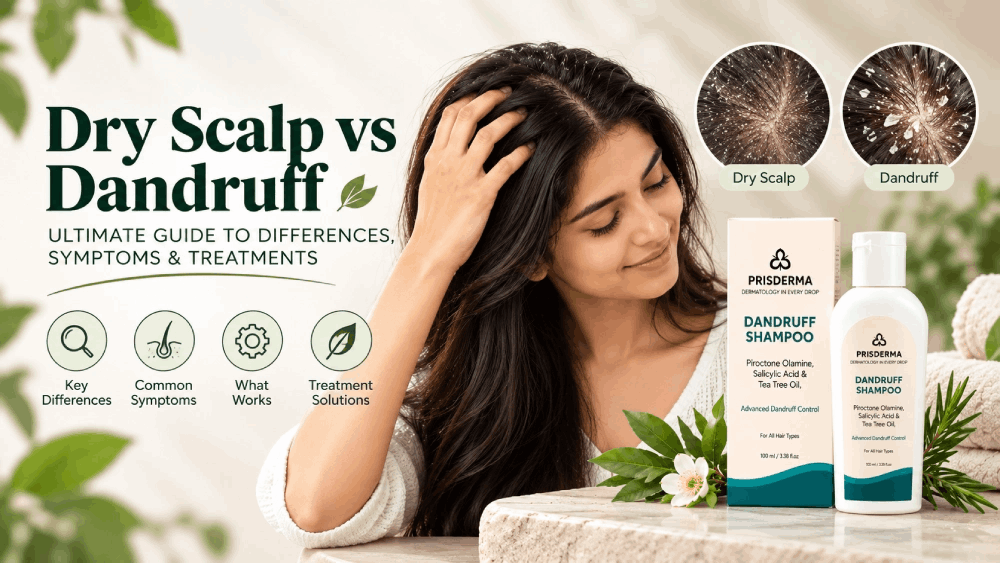
Dry Scalp vs Dandruff: Ultimate Guide to Differences, Symptoms & Treatments
If you’ve ever spotted white flakes on your shoulders, you’ve probably already tried a different shampoo or a quick oil massage. But flakes have more than one cause, and treating the wrong one can leave your scalp itchier than before. In this guide, we’ll explain how to tell dry scalp from dandruff and which treatment fits each.
Key Takeaways
- Dry scalp is caused by a lack of moisture, while dandruff is linked to an oily scalp and an overgrowth of Malassezia yeast.
- Dry scalp flakes are small and white, while dandruff flakes are larger, yellowish and oily.
- Dandruff and seborrheic dermatitis together affect about half of adults worldwide.
- Moisturizing care helps dry scalp, but dandruff usually needs an anti-fungal shampoo.
- Using an anti-dandruff shampoo on a truly dry scalp can worsen dryness.
- Persistent redness, scaling or hair loss should be assessed by a dermatologist.
What Is Dry Scalp?
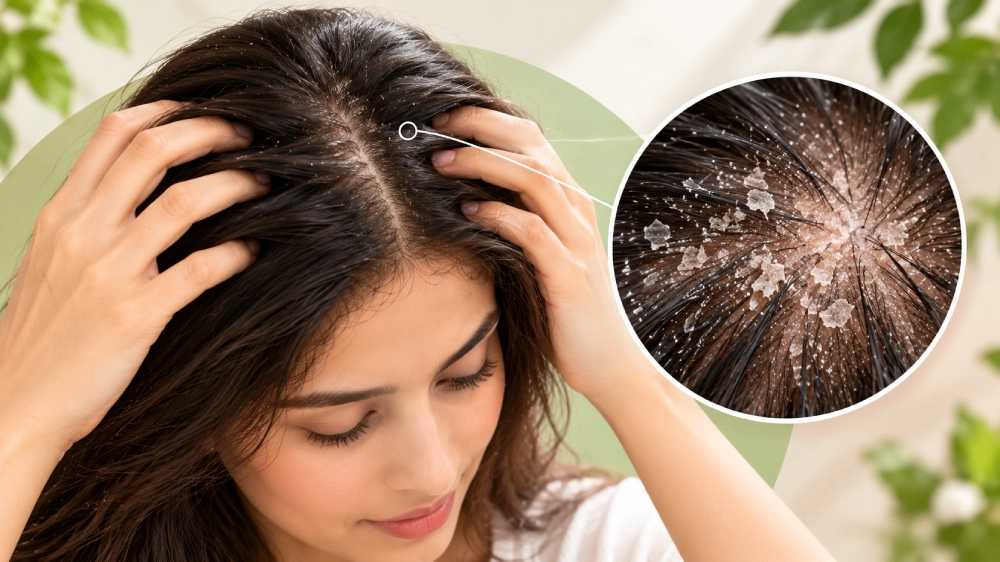
Dry scalp is a condition where the skin on your head lacks moisture, causing tightness, itching and small, dry flakes. It happens when your scalp doesn’t produce or retain enough natural oil. Cold weather, low humidity, hot showers and harsh shampoos are common triggers.
For example, many people notice flaking every winter, when indoor heating strips moisture from the skin. Dry skin on your arms and legs usually shows up at the same time, which is a useful clue. For more on daily scalp care, read our guide to the best hair care routine for hair growth.
What Is Dandruff?
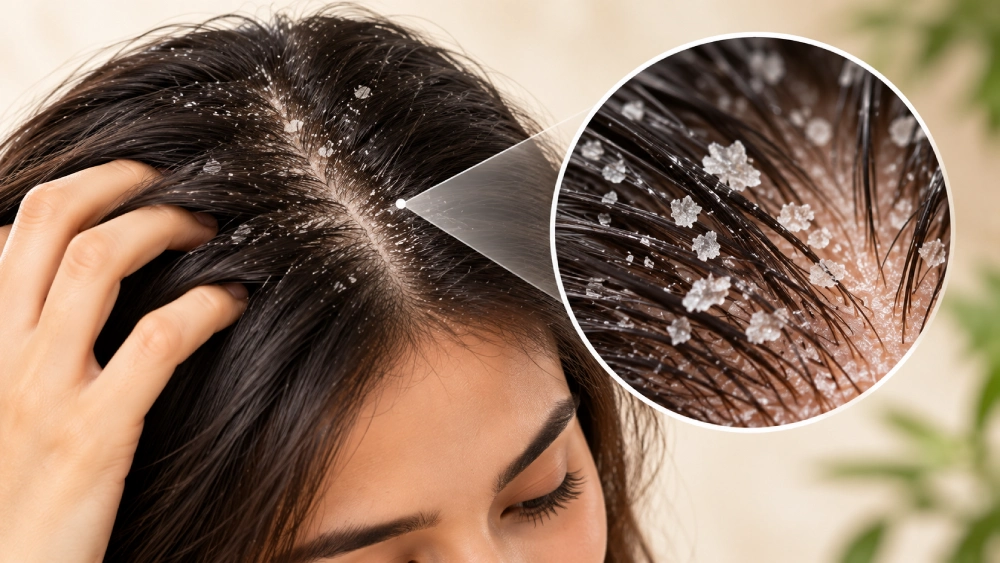
Dandruff is a common scalp condition that causes itching and visible flaking without significant inflammation. It is linked to three factors: Malassezia yeast that naturally lives on the scalp, sebum (oil) production, and individual sensitivity. The yeast breaks down scalp oils, and the by-products can irritate sensitive scalps.
Moreover, dandruff sits on a spectrum with seborrheic dermatitis, a more severe form that causes redness and inflamed patches. Dandruff and seborrheic dermatitis together affect about half of the adult population; Source: Borda & Wikramanayake, Journal of Clinical and Investigative Dermatology, 2015. In short, dandruff is common, chronic and manageable, but it is not a hygiene problem.
Why Does Telling Dry Scalp and Dandruff Apart Matter?
Telling them apart matters because the two conditions need opposite treatments. Dry scalp needs moisture, while dandruff needs oil control and anti-fungal action. Choosing wrongly can prolong the problem.
For example, a heavy oil applied to a dandruff-prone scalp can feed the yeast and increase flaking. Meanwhile, a strong anti-dandruff shampoo used daily on a dry scalp can strip more moisture. Getting the diagnosis right also saves months of trial and error.
How Do Dry Scalp and Dandruff Differ?
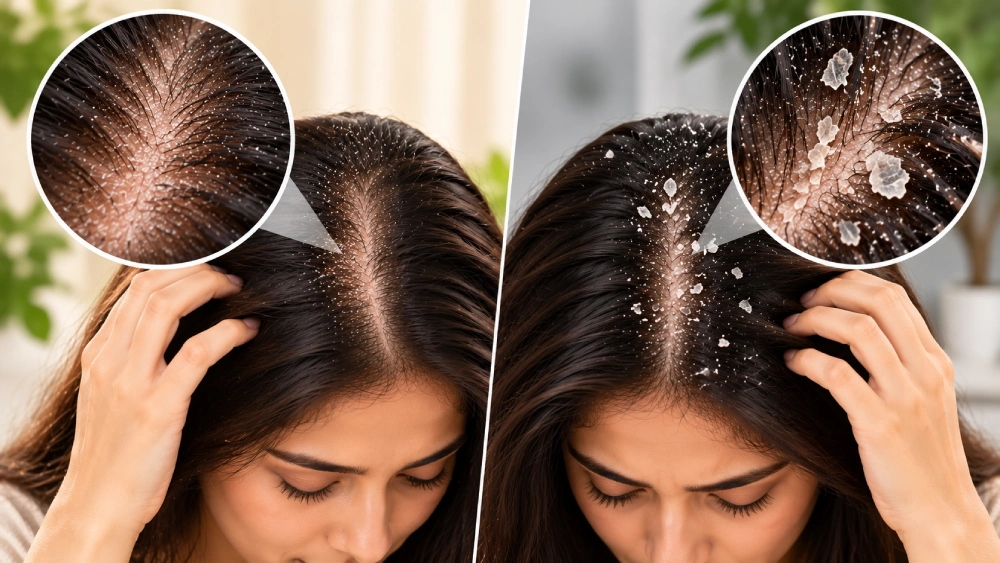
Dry scalp and dandruff differ mainly in their cause, flake type and scalp condition. Let’s take a look at each dimension.
CAUSE
Dry scalp comes from moisture loss, whereas dandruff comes from yeast, sebum and sensitivity. For example, one person may flake only in winter (dry scalp), while another flakes year-round, especially during stress (dandruff).
Flakes and Scalp Feel
Dry scalp flakes are small, white and powdery, and they fall off easily. Dandruff flakes are larger, yellowish and greasy, and they often cling to the scalp and hair. Dry scalp feels tight, while a dandruff scalp often looks or feels oily.
Symptoms and Body Clues
Both conditions cause itching. However, dry scalp often comes with dry skin elsewhere, while dandruff may also affect the eyebrows, sides of the nose or behind the ears.
| Feature | Dry Scalp | Dandruff |
|---|---|---|
| Main Cause | Lack of moisture | Malassezia yeast, excess oil, sensitivity |
| Flake Size and Color | Small, white, powdery | Large, yellowish, oily |
| Scalp Feel | Tight, dry | Oily or greasy |
| Seasonal Pattern | Worse in winter | Year-round, worse with stress |
| Best Approach | Moisturizing care | Anti-fungal shampoo |
How Do You Treat Dry Scalp and Dandruff?
Treatment depends on the cause: hydrate a dry scalp, and control yeast and oil for dandruff. Let’s explore each approach.
How to Treat Dry Scalp
Start by washing less often with lukewarm water and a gentle, sulfate-free shampoo. By adding a light, non-greasy scalp moisturizer, you can restore comfort quickly. In addition, avoid very hot showers and harsh styling products. Nutrition matters too, so read our guide on biotin for hair growth to see when supplements actually help.
How to Treat Dandruff
Look for shampoos with proven anti-fungal ingredients such as ketoconazole, zinc pyrithione or selenium sulfide. These ingredients reduce Malassezia levels, which in turn reduces flaking and itch. In one study, four shampoo treatments with 1% selenium sulfide showed 92.5% efficiency against dandruff; Source: Sibi et al., Journal of Clinical and Investigative Dermatology, 2023. For best results, leave the lather on your scalp for a few minutes before rinsing.
When Should You See a Dermatologist?
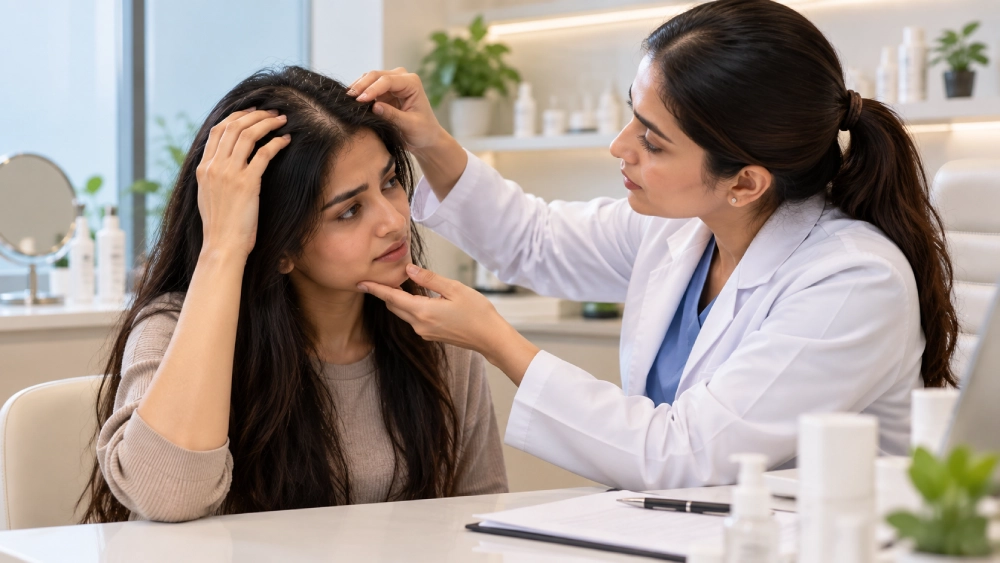
You should see a dermatologist if flaking persists after four weeks of appropriate treatment. Red, inflamed patches, thick scaling, oozing or noticeable hair shedding also need professional assessment. A doctor can rule out seborrheic dermatitis, psoriasis or eczema, which can look similar.
Which Products Can Help You Manage Your Scalp?
The right products match your scalp type, and several free or low-cost options work well. For dandruff, an anti-dandruff shampoo used consistently is the natural first step. You can do this using Prisderma’s Anti-Dandruff Shampoo
Free and widely available alternatives include over-the-counter ketoconazole 1%, zinc pyrithione or selenium sulfide shampoos, and pharmacist advice. For dry scalp, a simple fragrance-free moisturizer and a humidifier at home can help. If flaking comes with thinning, a hair growth serum may support a healthy scalp routine, but check the cause first.
What Should You Do Next?
Your next step is to identify your flake type, then commit to one treatment for four weeks. First, check flake color and scalp feel after your next wash. Second, start the matching routine and avoid switching products every few days. Third, track changes in itch and flaking weekly.
Consistency matters just as much for hair health. Our post on how long a hair growth kit takes to show results explains why patience is part of any scalp routine.
Conclusion
Dry scalp and dandruff look similar, but they have different causes, flakes and fixes. Dry scalp needs moisture, while dandruff needs anti-fungal, oil-controlling care. Sometimes you can have both at once, so the two approaches often complement each other. Identify your type, be consistent, and see a dermatologist if symptoms persist. Explore Prisderma’s hair care range to build a routine that supports a healthy scalp.
FAQs
What is the main difference between dry scalp and dandruff?
Dry scalp is caused by a lack of moisture, while dandruff is linked to Malassezia yeast, excess oil and individual sensitivity. Dry scalp flakes are small, white and powdery. Dandruff flakes are larger, yellowish and often oily.
How can I tell if I have dry scalp or dandruff?
Check your flakes and how your scalp feels after washing. Small, white flakes with a tight, dry scalp (often with dry skin elsewhere) point to dry scalp. Larger, greasy flakes that cling to the hair and scalp point to dandruff.
Can you have dry scalp and dandruff at the same time?
Yes, it's possible to have both, and it can make the cause harder to identify. In that case, use a gentle anti-dandruff shampoo a few times a week and add a light, non-greasy scalp moisturizer. If symptoms don't settle, see a dermatologist.
Can I use anti-dandruff shampoo for dry scalp?
It isn't the first choice, because anti-fungal shampoos target yeast and oil, not dryness. Using a strong one too often on a dry scalp can increase tightness and flaking. Start with a gentle, sulfate-free shampoo and moisturizing care instead.
When should I see a dermatologist for flaky scalp?
See a dermatologist if flaking persists after about four weeks of appropriate treatment. Red or inflamed patches, thick scaling, oozing or noticeable hair shedding also need assessment. These can point to seborrheic dermatitis, psoriasis or eczema.
Leave a Reply