No products in the cart.
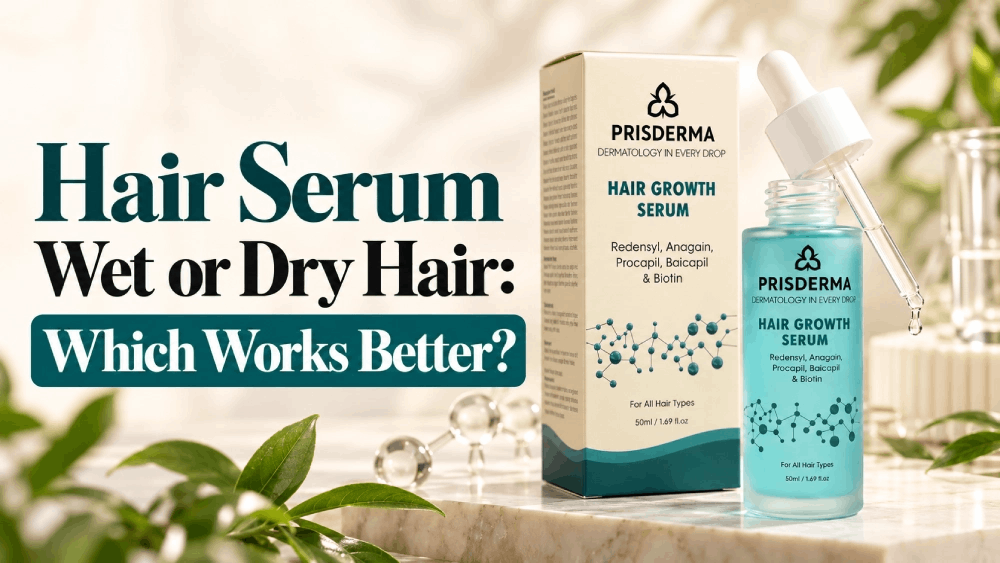
Hair Serum Wet or Dry Hair: Which Works Better?
Should you apply hair serum to wet or dry hair? For many leave-in smoothing serums, towel-dried hair works well before styling, while dry hair can be ideal for taming frizz and flyaways. The right choice depends on the serum’s formulation and intended use.
If you are already dealing with hair fall, choosing the right product and using it correctly becomes even more important.
In general, many hair serums designed for hair lengths work well on towel-dried, damp hair, while some are intended for use on dry hair. The best option depends on the product formulation, its instructions, and what you want to achieve. A serum designed to smooth frizz is also different from a scalp treatment formulated to support hair growth.
Understanding these differences can help you build a hair-care routine that suits your needs without unnecessary product use.
Hair Serum Wet or Dry Hair: Which Is Better?
Neither method is universally better. Applying serum to damp hair can help distribute the product through the lengths, while applying it to dry hair can help smooth visible frizz and improve the appearance of your hairstyle.
Applying Hair Serum to Damp Hair
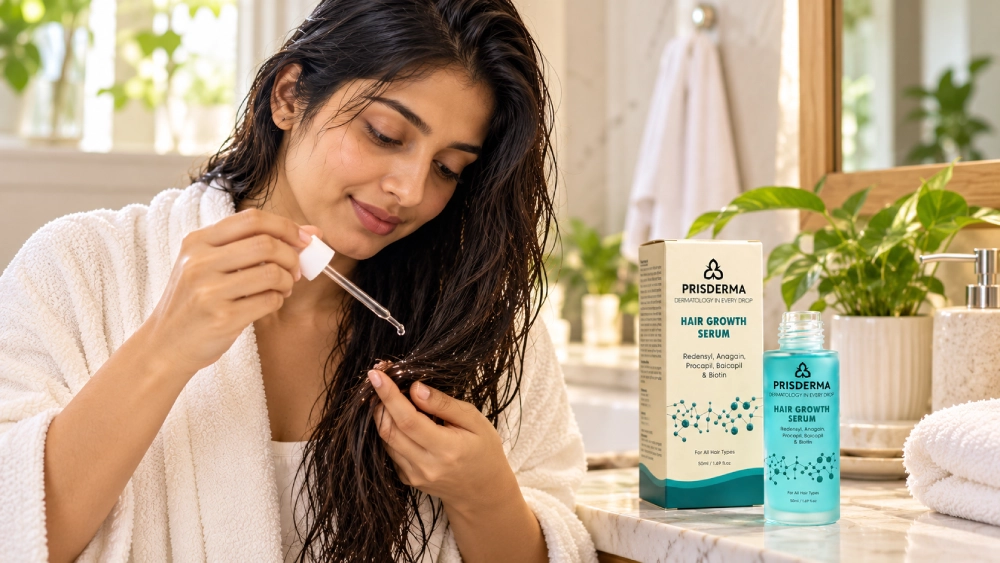
Damp hair is a practical starting point for many leave-in serums designed to condition, smooth, or protect hair lengths.
After washing, gently squeeze out excess water with a soft towel. Apply the serum according to its instructions, distributing it evenly through the mid-lengths and ends.
Potential benefits include:
- Easier distribution: Slightly damp hair can make it easier to spread certain lightweight serums across the lengths.
- Frizz management: Some formulations help smooth the hair surface and reduce the appearance of frizz.
- Smoother styling: A suitable leave-in serum may help hair feel softer and easier to manage before styling.
Avoid applying a product to soaking-wet hair unless its instructions specifically recommend doing so. Excess water can dilute some products or make it harder to judge how much you have applied.
Applying Hair Serum to Dry Hair
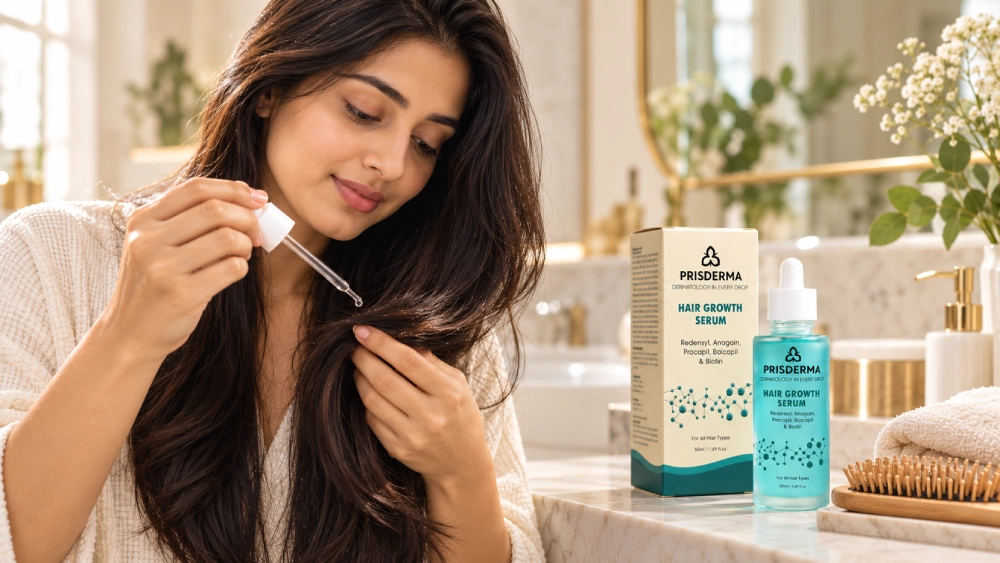
Dry hair can be a suitable option when the product is intended for finishing, smoothing, or taming flyaways.
Use a small amount and spread it between your palms before lightly applying it to the hair lengths. Concentrate on areas that look frizzy or feel rough.
Potential benefits include:
- Finishing your hairstyle: Certain serums can add shine and improve the appearance of dry hair.
- Taming flyaways: A small amount may help smooth stray strands.
- Targeted application: You can focus on specific areas that need extra smoothing without reapplying product throughout your hair.
However, applying too much can leave hair looking greasy or weighed down, especially if it is fine or naturally oily.
Wet Hair vs. Dry Hair: A Quick Comparison
| Factor | Damp hair | Dry hair |
|---|---|---|
| Best suited for | Many leave-in smoothing serums | Finishing and smoothing serums |
| Main purpose | Distributing product before styling | Managing visible frizz and flyaways |
| Application | After gently towel-drying | On dry, styled or unstyled hair |
| Main precaution | Avoid excess water if not recommended | Avoid overapplication |
These are general guidelines rather than fixed rules. Always follow the instructions for your specific product.
How to Apply Hair Serum Correctly
Knowing how to apply hair serum is just as important as deciding when to use it. The right technique helps you avoid product buildup and get more consistent results.
Step 1: Check the Product Instructions
Start by identifying the purpose of your serum. Is it designed to smooth hair lengths, protect against styling damage, condition dry hair, or serve as a scalp treatment?
These products may have different application requirements. A cosmetic hair serum intended for the lengths should not automatically be used on the scalp.
Step 2: Start With a Small Amount
Dispense a small amount into your palm, following the label’s directions. The quantity you need depends on your hair length, thickness, texture, and the product’s concentration.
Rub your palms together to distribute the serum before applying it. You can add a little more if needed, but avoid using a large quantity immediately.
Apply It Evenly
For a hair-length serum, gently work the product through the mid-lengths and ends. These areas often experience dryness, friction, and styling damage.
Avoid concentrating the product near the roots unless the manufacturer specifically recommends scalp application. This is particularly useful if your hair becomes oily quickly.
Step 4: Adjust Your Styling Routine
If the serum is intended for use before blow-drying, check whether it also provides heat protection. Not every serum protects hair from heat, so a separate heat protectant may be necessary.
If you prefer air-drying, follow the product’s instructions for damp-hair application. For finishing, use a dry-hair serum only when the label allows it.
Does Hair Serum Help With Hair Fall?
If your primary concern is hair loss, it is important to understand what a serum can realistically do.
A cosmetic hair serum may improve smoothness, reduce friction, and make strands easier to manage. Depending on the formulation, this may help reduce certain types of hair breakage.
However, reducing hair breakage is not the same as treating hair loss from the roots.
Hair Breakage vs. Hair Loss
Hair breakage occurs when strands snap along their length. It can be associated with excessive heat styling, chemical processing, friction, or damage to the hair shaft.
Hair shedding or loss may have different causes, including hereditary hair loss, illness, nutritional deficiencies, hormonal changes, or scalp conditions.
A smoothing serum may help with the appearance and manageability of damaged hair, but it should not be assumed to treat these underlying causes.
If you notice persistent shedding, widening part lines, bald patches, or a sudden increase in hair loss, consult a dermatologist to identify the cause.
Cosmetic Serums vs. Scalp Hair-Growth Treatments
These products serve different purposes.
Cosmetic hair serums generally focus on improving the appearance, smoothness, shine, or manageability of hair strands.
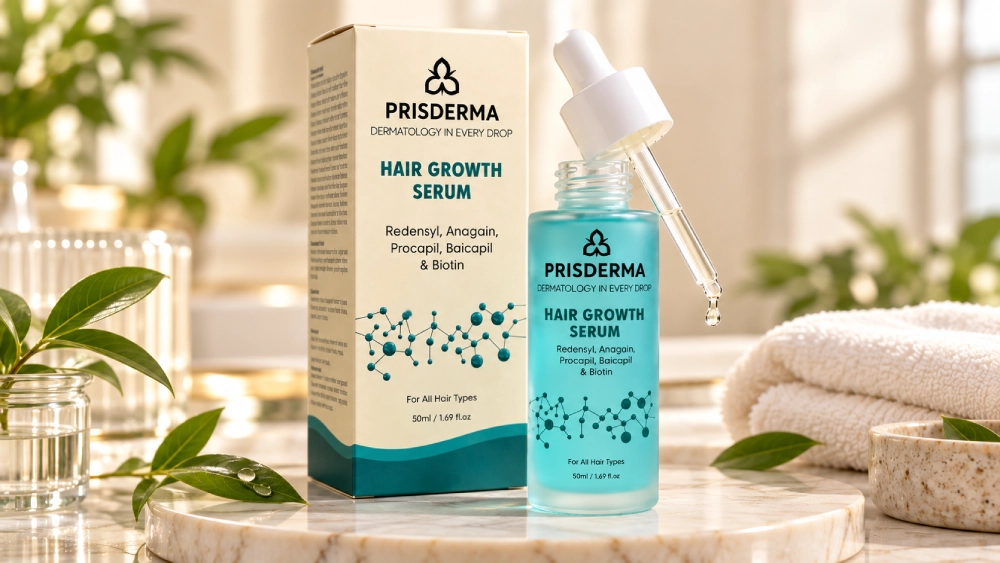
Scalp treatments are formlated for application to the scalp and may contain specific ingredients intended to address particular hair or scalp concerns. Their benefits depend on the ingredients, formulation, and evidence supporting their use.
For example, minoxidil is a recognised treatment for certain types of hair loss, but it is not interchangeable with an ordinary cosmetic hair serum. Its suitability and instructions depend on the individual and product.
If your goal is to address hair loss rather than simply manage frizz or breakage, choose products based on your actual concern and seek professional advice when needed.
Hair Serum Application Tips for Different Hair Types
Fine or Oily Hair
Choose a lightweight formula suited to your hair type. Begin with a small amount and concentrate on the ends rather than the roots. Applying too much can make fine hair look flat or greasy.
Dry, Frizzy, or Damaged Hair
A suitable smoothing serum may help improve softness and manageability. Apply it evenly to the areas that need attention, following the label’s guidance on damp or dry hair.
You may also benefit from a conditioning routine that addresses dryness rather than relying on serum alone.
Curly or Textured Hair
Curly hair can be more prone to visible frizz and dryness, although individual needs vary. A compatible serum may help smooth the hair surface and improve manageability.
Distribute the product gently to avoid disrupting your natural curl pattern. Check whether it works alongside your conditioner, leave-in product, or styling cream.
Common Hair Serum Mistakes to Avoid
Even a suitable product may disappoint if you use it incorrectly. Watch out for these common mistakes:
- Using too much: Excess product can weigh down the hair or create a greasy appearance.
- Applying every serum to the scalp: Products designed for hair lengths may not be appropriate for scalp use.
- Ignoring the label: Application instructions differ between formulations, so do not assume every serum works best on damp hair.
- Expecting instant hair growth: Improved shine or smoothness does not demonstrate that a product stimulates new hair growth.
- Ignoring persistent hair fall: A cosmetic product cannot replace an assessment of the underlying cause when hair loss continues.
A consistent, suitable routine is more useful than repeatedly changing products without understanding your hair’s needs.
FAQs
Can I apply hair serum every day?
Some hair-length serums can be used daily, while others are intended for less frequent use. Follow the product instructions and adjust based on how your hair responds.
Should I apply hair serum before or after drying my hair?
It depends on the product. Some serums are designed for damp hair before styling, while others are intended for dry hair as a finishing product. Check the label, especially if you use heat-styling tools.
Can I apply hair serum directly to my scalp?
Only if the product is specifically formulated and labelled for scalp application. A cosmetic serum intended for hair lengths may cause unwanted buildup when applied to the roots.
Does hair serum reduce hair fall?
A suitable cosmetic serum may help manage breakage caused by friction or damage, but it does not necessarily treat hair loss from the roots. Persistent or unexplained hair fall warrants professional evaluation.
Conclusion
So, should you apply hair serum to wet or dry hair? For many leave-in smoothing serums, towel-dried hair is a convenient option before styling. Dry-hair application can also work well for products designed to control frizz and finish a hairstyle.
The key is to choose a serum that matches your hair’s needs and follow its application instructions. If you are experiencing hair fall, remember that improving hair texture and addressing the underlying cause of hair loss are two different goals.
At Prisderma, explore hair-care solutions suited to your routine and concerns. If hair loss is your main concern, focus on understanding its cause and choosing an appropriate, evidence-based approach rather than relying on a cosmetic serum alone.
Leave a Reply