No products in the cart.
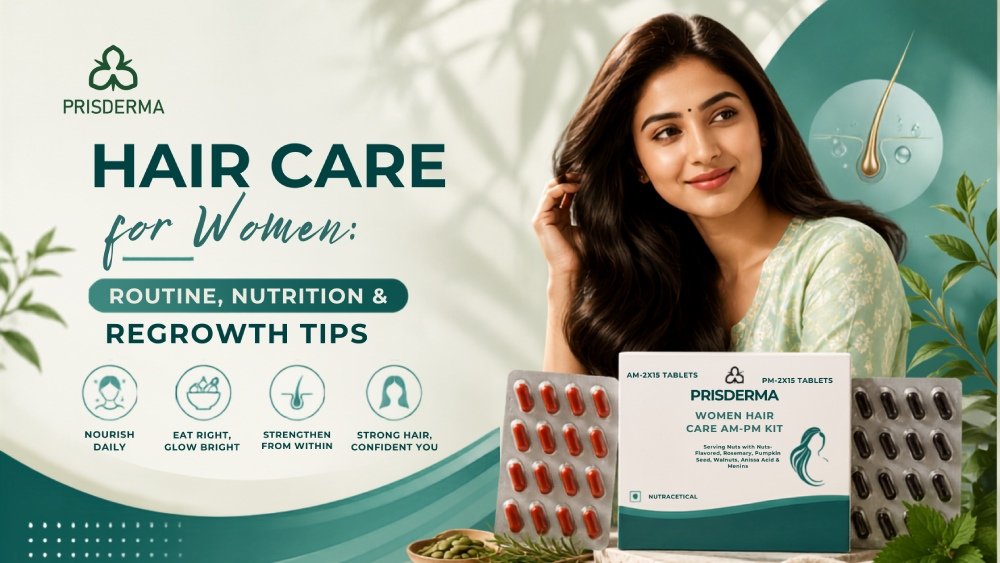
Hair Care for Women: Routine, Nutrition & Regrowth Tips
Healthy hair is more than just a beauty goal; it’s often a reflection of a healthy scalp, balanced nutrition, and consistent care. However, maintaining healthy hair isn’t always easy. Daily exposure to pollution, heat styling, UV rays, chemical treatments, stress, and hormonal changes can gradually affect hair strength and scalp health. As a result, many women experience concerns such as hair fall, hair thinning, dryness, frizz, dandruff, or breakage.
While no single product can solve every hair concern, adopting the right hair care routine, eating a balanced diet, and protecting your hair from damage can help maintain healthier, stronger-looking hair. Understanding the cause of your hair concern is equally important, as some conditions may require professional medical advice in addition to everyday hair care.
This guide explains why hair care is important for women, common hair concerns, practical daily tips, and when it may be appropriate to consider targeted hair growth support.
Why Hair Care Is Important for Women
Hair care is about more than improving appearance. A consistent routine helps maintain scalp health, strengthens the hair shaft, and reduces everyday damage caused by environmental and lifestyle factors.
Women’s hair naturally changes throughout different stages of life. Hormonal fluctuations during pregnancy, postpartum recovery, menopause, or conditions such as PCOS and thyroid disorders can influence the hair growth cycle. Frequent colouring, heat styling, pollution, hard water, and poor nutrition may further weaken the hair, making it more prone to breakage and excessive shedding.
Following a regular hair care routine can help:
- Keep the scalp clean and healthy.
- Reduce hair breakage and split ends.
- Improve moisture and manageability.
- Protect hair from environmental damage.
- Support stronger, healthier-looking hair over time.
Consistency often delivers better results than frequently changing products.
Common Hair Concerns Women Experience
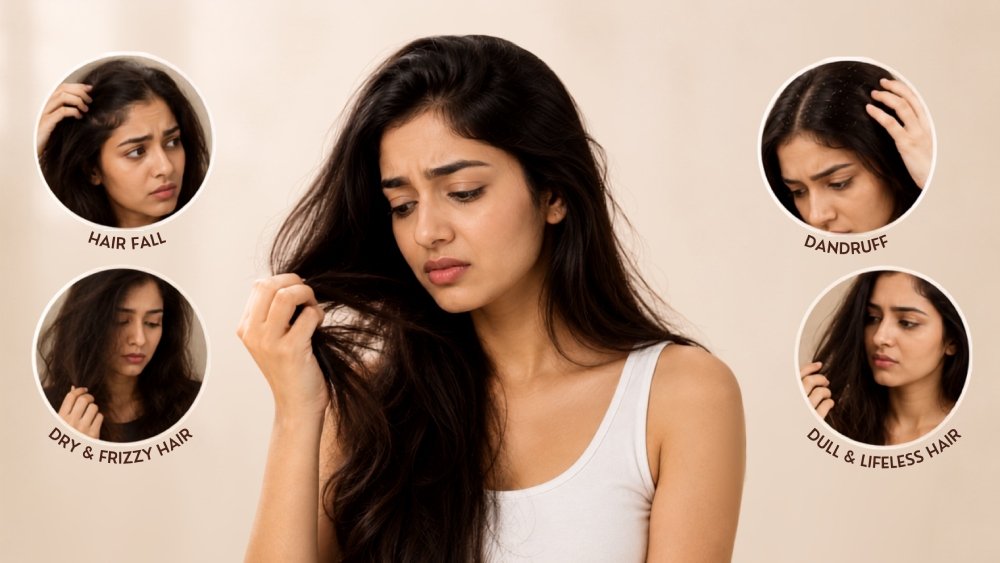
Many women experience multiple hair concerns at the same time. Identifying the problem helps you choose the most appropriate care.
Hair concerns affect women of all ages, ranging from temporary hair shedding to long-term hair thinning. While some concerns improve with changes in hair care habits or lifestyle, others may require medical evaluation. Female pattern hair loss (FPHL), one of the most common causes of progressive hair thinning, accounts for approximately 15.3% of cases of diffuse hair loss among Indian women. Understanding the type of hair concern is the first step towards choosing the right approach to care.
| Hair Concern | Common Causes |
|---|---|
| Hair Fall | Stress, illness, hormonal changes, nutritional deficiencies, genetics |
| Hair Thinning | Female-pattern hair loss, ageing, hormonal imbalance |
| Dry & Frizzy Hair | Heat styling, chemical treatments, lack of moisture |
| Dandruff & Itchy Scalp | Excess oil, fungal overgrowth, scalp irritation |
| Hair Breakage | Excessive heat, colouring, tight hairstyles, rough brushing |
| Oily Scalp | Excess sebum production and product build-up |
If dandruff or an itchy scalp is one of your primary concerns, understanding its causes and choosing the right treatment is equally important. Read our complete Anti-Dandruff Treatment Guide to learn more about managing dandruff effectively.
Hair Fall vs Hair Breakage vs Hair Thinning
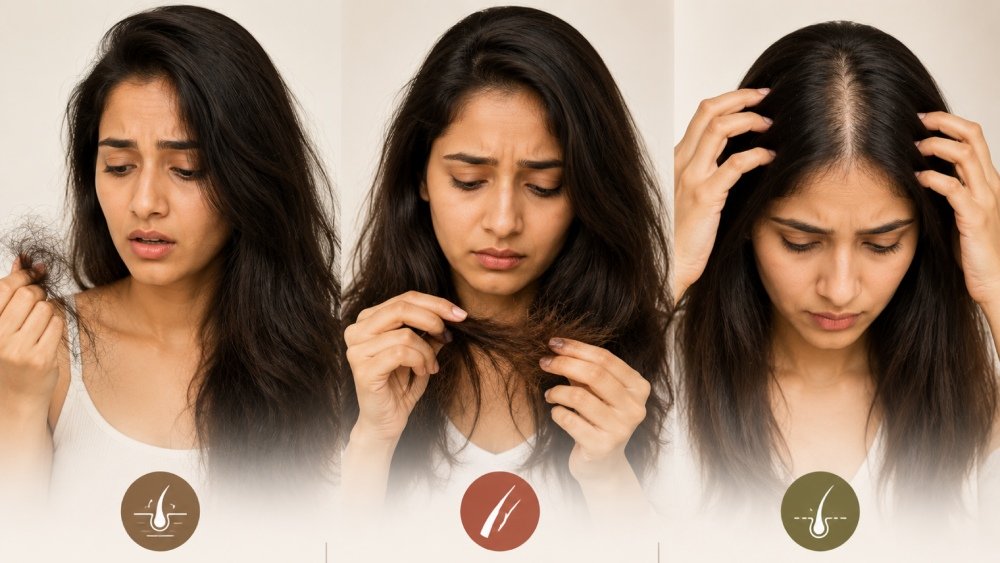
These terms are often used interchangeably, but they describe different concerns.
- Hair Fall: Hair sheds from the root as part of the natural hair growth cycle or due to factors such as stress, illness, hormonal changes, or nutritional deficiencies.
- Hair Breakage: Hair snaps along the shaft because it has become weak or damaged through heat styling, colouring, chemical treatments, or rough handling.
- Hair Thinning: Hair gradually becomes less dense over time, often due to genetics, hormonal changes, or prolonged hair shedding.
Understanding the difference is important because the right solution depends on the underlying cause.
What Causes Hair Loss and Hair Damage in Women?
Both internal and external factors influence hair health.
1. Hormonal Changes
Hormonal changes associated with pregnancy, menopause, PCOS, or thyroid disorders can affect the normal hair growth cycle. In some women, genetics and hormones may contribute to female pattern hair loss, which usually requires medical evaluation and treatment.
2. Nutritional Deficiencies
Hair follicles require nutrients such as protein, iron, zinc, and vitamin D for normal growth. A deficiency in these nutrients may contribute to increased hair shedding or weaker hair.
3. Heat Styling and Chemical Treatments
Frequent use of straighteners, curling irons, bleaching, colouring, and chemical treatments weakens the protective outer layer of the hair, increasing the risk of dryness and breakage.
4. Stress and Lifestyle Factors
Physical illness, emotional stress, poor sleep, and unhealthy eating habits can temporarily disrupt the hair growth cycle, leading to increased shedding several weeks or months later.
5. Environmental Damage
Pollution, UV exposure, humidity, and hard water can gradually affect both scalp health and hair quality if proper care is not taken.
Best Hair Care Routine for Women
A simple, consistent routine is often more beneficial than using multiple products without a clear plan.
1. Cleanse Your Scalp
Choose a shampoo suitable for your scalp type to remove dirt, sweat, oil, and product buildup while maintaining the scalp’s natural balance.
2. Condition Every Wash
The conditioner helps replenish moisture, smooth the hair cuticle, and reduce friction between strands. Apply it mainly to the mid-lengths and ends.
3. Protect Hair from Heat
Always use a heat protectant before blow-drying, straightening, or curling your hair. Reducing unnecessary heat exposure helps minimise damage.
4. Deep Condition Weekly
A weekly deep-conditioning treatment restores moisture and improves softness, especially for dry, coloured, or chemically treated hair.
5. Care for Your Scalp
Healthy hair begins with a healthy scalp. If you experience dandruff, persistent itching, or excessive oiliness, choose products formulated to address those concerns.
Daily Hair Care Tips for Healthy Hair
Simple habits can help protect your hair every day.
- Detangle gently using a wide-tooth comb.
- Avoid tying your hair too tightly for long periods.
- Sleep on a satin or silk pillowcase to reduce friction.
- Wash hair with lukewarm rather than hot water.
- Protect hair from prolonged sun exposure.
- Trim split ends regularly.
- Stay hydrated throughout the day.
Small changes practised consistently often have a greater impact than frequently changing products.
Common Hair Care Mistakes to Avoid
Many everyday habits can contribute to hair damage without you realising it.
Avoid these common hair care mistakes:
- Overwashing your hair.
- Skipping conditioner.
- Using excessive heat without protection.
- Brushing wet hair aggressively.
- Frequently colouring or bleaching hair.
- Ignoring persistent scalp problems.
- Expecting immediate results from new products.
Hair grows in cycles, so noticeable improvements often take several months of consistent care.
Healthy Lifestyle Habits That Support Hair Health
Healthy hair depends on more than external care. A balanced diet, adequate hydration, quality sleep, and stress management all contribute to overall hair and scalp health. Nutrients such as protein, iron, zinc, and vitamin D support normal hair growth, while deficiencies may contribute to increased hair shedding in some individuals. Rather than self-prescribing supplements, it’s best to seek advice from a healthcare professional if you suspect a nutritional deficiency. Combining healthy lifestyle habits with a consistent hair care routine can help maintain healthier-looking hair over time.
When a Hair Care Routine May Not Be Enough
A healthy hair care routine can improve scalp health, reduce everyday damage, and support healthier-looking hair. However, persistent hair concerns are not always caused by poor hair care alone.
If you continue to experience excessive hair fall, progressive hair thinning, widening of the hair part, or patchy hair loss despite maintaining a good routine and balanced diet, there may be an underlying medical cause. Conditions such as female pattern hair loss, PCOS, thyroid disorders, nutritional deficiencies, or certain medications can affect the hair growth cycle.
In these situations, consulting a dermatologist is recommended. Identifying and treating the underlying cause is essential for long-term hair health.
When Should Women Consider a Hair Growth Kit?
A consistent hair care routine can help maintain scalp health and reduce everyday hair damage. However, if you continue to experience excessive hair fall or gradual hair thinning despite following healthy hair care habits, you may benefit from additional support.
A hair growth kit for women can complement your routine by providing targeted care alongside a balanced diet and healthy lifestyle. While these products may help support healthier-looking hair and overall scalp health, they should not replace medical treatment for hair loss caused by underlying conditions such as hormonal imbalances, thyroid disorders, or female pattern hair loss. If hair loss persists or worsens, consult a dermatologist for an appropriate diagnosis and treatment plan.
Conclusion
Healthy hair is built through consistent care, good nutrition, and informed choices rather than quick fixes. Following a balanced hair care routine, protecting your hair from everyday damage, and maintaining a healthy lifestyle can help improve hair quality and support long-term scalp health.
If your hair concerns persist despite following a healthy routine, seek advice from a dermatologist to identify the underlying cause. Combining professional guidance with appropriate hair care products can help you make informed decisions and support healthier, stronger-looking hair over time.
Frequently Asked Questions
1. What is the best hair care routine for women?
The best hair care routine starts with choosing products that suit your hair and scalp type. Cleanse your scalp regularly, condition your hair after every wash, use a heat protectant before styling, deep condition weekly, and maintain a healthy lifestyle. Consistency is key to keeping your hair healthy and reducing damage.
2. How can women improve their hair health?
Improving hair health involves a combination of good hair care habits, a balanced diet, adequate hydration, stress management, and protecting hair from excessive heat and chemical treatments. Addressing underlying medical or nutritional issues can also help if hair concerns persist.
3. What are the best hair care products for women?
The best hair care products depend on your individual hair concerns. For example, women with dry hair may benefit from moisturising shampoos and conditioners, while those experiencing hair thinning may consider products formulated to support scalp health. Choosing products based on your hair type and concerns is more effective than following general trends.
4. What hair products do dermatologists recommend?
Dermatologists typically recommend products based on the cause of the hair concern. Gentle shampoos and clinically tested hair care products may be suggested for everyday hair maintenance. For persistent hair loss caused by medical conditions, a dermatologist may recommend evidence-based treatments alongside an appropriate hair care routine.
5. What should women avoid to keep their hair healthy?
To maintain healthy hair, avoid overwashing, excessive heat styling, harsh chemical treatments, tight hairstyles, and brushing wet hair aggressively. Using products that don't suit your hair or scalp type can also contribute to dryness, breakage, or irritation. Following a consistent hair care routine and protecting your hair from everyday damage can help maintain healthier-looking hair over time.
Leave a Reply